
Workforce Intelligence for Better Hiring Decisions

Turn messy job descriptions into hiring decision intelligence.

Avelin helps HR service providers and workforce platforms classify roles, detect weak job signals, extract skill evidence, identify ambiguity, and decide when human review is needed.

Grounded in O*NET 30.3 and exposed through structured JSON APIs.

Runtime API access is currently controlled during beta. Documentation and examples are public; API keys are issued manually to early-access users. Request early access.

Role Intelligence Output

Structured JSON

Job text -> role intelligence

Input

IT Support Tech

Troubleshoot user issues, resolve tickets, support hardware and software.

Occupation Alignment

15-1232.00

Computer User Support Specialists

Confidence

92%

Skills

6 detected

Review Guidance

REVIEW_READY

Weak Signal

low

Ambiguity

role scope clear

Next Step

confirm tools

TroubleshootingTechnical SupportTicketing SystemsHardwareCustomer Service

Structured JSON | skill evidence | confidence-aware | review-ready

Structured decision support with taxonomy grounding

Avelin transforms noisy job titles and descriptions into structured, confidence-aware role intelligence that applications, HR advisors, and AI agents can use.

O*NET 30.3OpenAPIStructured JSONAPI key / quota governance

Built For

Built for hiring and workforce teams that need better role signals.

Built for HR service providers, boutique recruiting firms, staffing firms, workforce advisors, and API-first HR technology teams.

HR service providers
Boutique recruiting firms
Staffing firms
Workforce advisors
API-first HR technology teams
Workforce platforms

Role Intelligence

Decision support before hiring work moves downstream.

From job text to role intelligence.

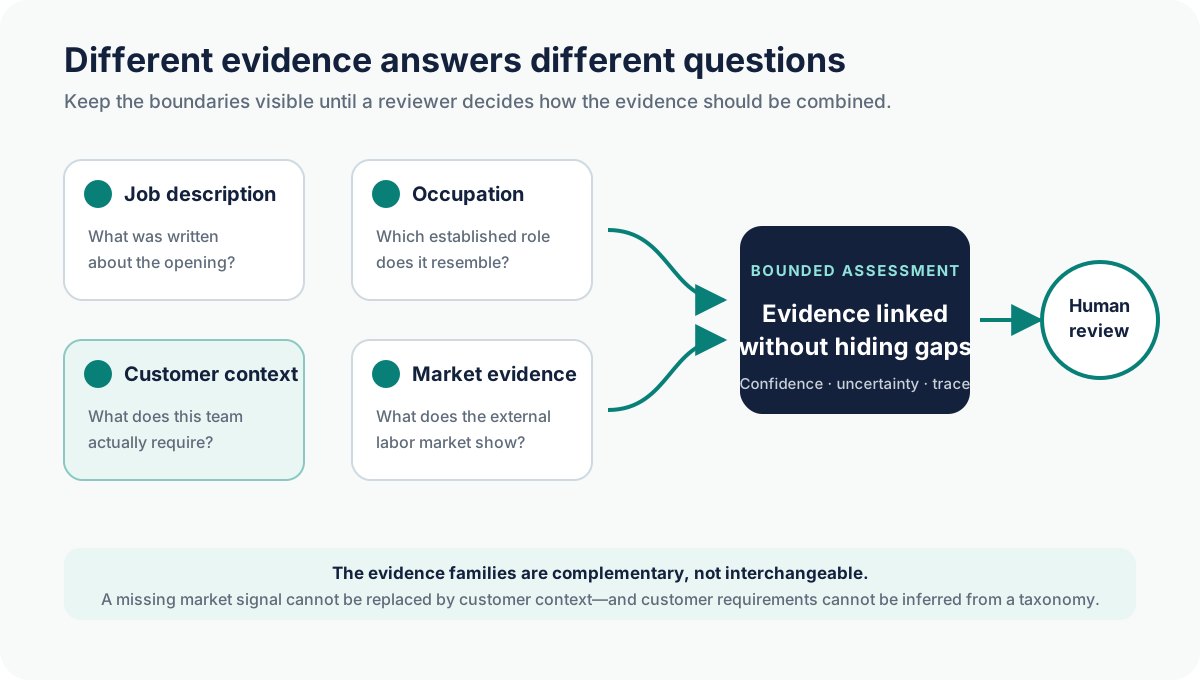
Submit a job title and description. Avelin returns occupation alignment, skill evidence, weak-signal indicators, ambiguity flags, confidence guidance, and review-ready explanations.

Improve recruiting intake before sourcing starts.

Avelin helps identify unclear role requirements, missing skill signals, vague descriptions, and questions recruiters should ask before starting a search.

Confidence-aware, not black-box.

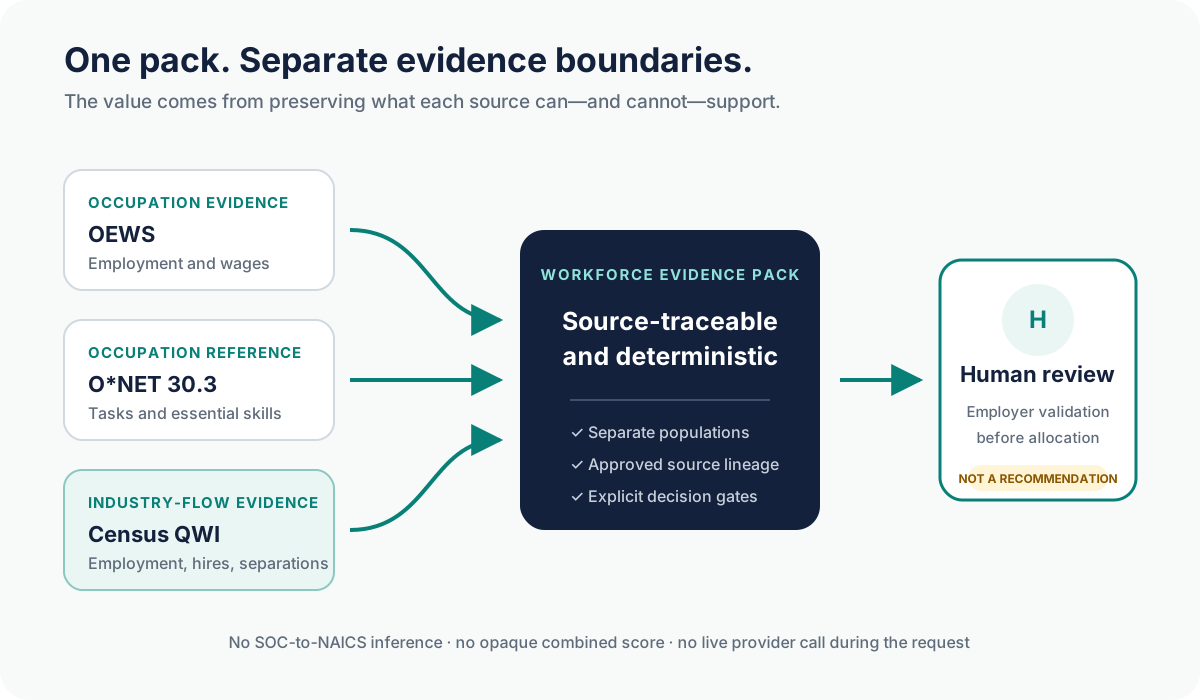
Avelin exposes confidence, uncertainty, trust, ambiguity, weak-signal, and review-routing fields so teams can decide what to automate and what to review manually.

The Problem

Job data is noisy.

Titles are inconsistent, descriptions are incomplete, and generic AI systems can invent labels that do not map cleanly to a workforce taxonomy.

Teams supporting hiring decisions need structured role, skill, confidence, ambiguity, and review signals that can move through product logic and human review.

Before / After

Before

Messy job title plus incomplete description: "Ops analyst. Dashboards. SQL. Some forecasting."

After

Occupation alignment, skill evidence, weak-signal indicators, ambiguity flags, confidence guidance, and review-ready explanations.

What the API Returns

Structured JSON for hiring decision workflows.

The API returns structured JSON that can be evaluated, displayed, routed, or used by AI agents.

Occupation alignment

O*NET 30.3-grounded role matches instead of improvised labels.

Skill evidence

Extracted skill signals and evidence that support the result.

Weak-signal indicators

Flags for sparse, vague, or low-evidence job descriptions.

Ambiguity flags

Signals that help identify unclear role requirements.

Confidence guidance

Confidence, trust, and uncertainty fields for routing logic.

Review guidance

Decision labels and explanations for automation or human review.

When To Use Each Endpoint

Choose the response shape your product needs.

/job/classify

Use when you need a single top O*NET occupation for job text.

/job/analyze

Use when you need ranked candidates, skill evidence, explanations, related context, and routing signals.

/occupation/profile

Use when product UIs or review workflows need structured occupation detail.

/market/top and /market/overview

Use when dashboards or enrichment flows need skill, technology, demand, or remote-work context.

Build role intelligence into your hiring workflow.

Start with the public docs or review the official examples repository. Runtime API keys are currently issued manually to early-access users during controlled beta.